
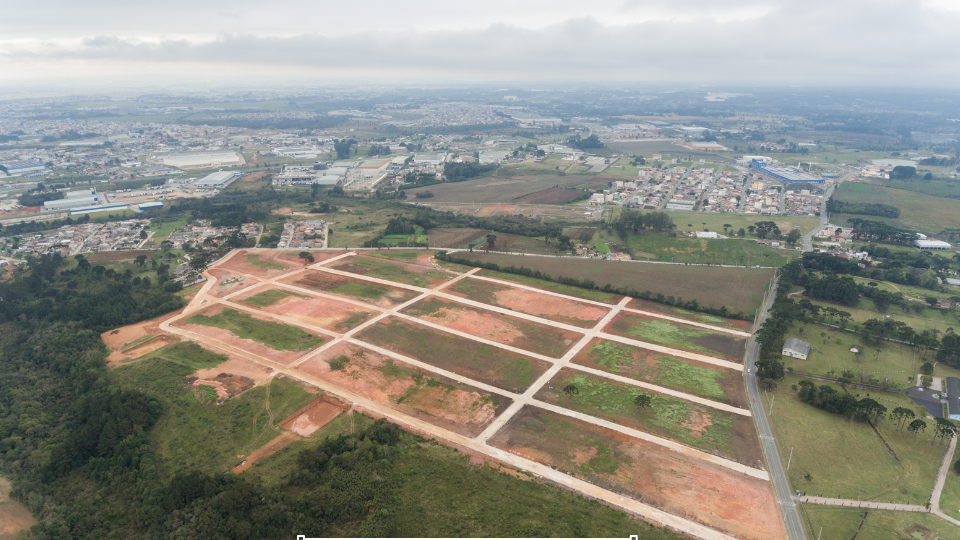
Why Vacant Land Is More Vulnerable Than You Think
Most people assume vacant land is the easiest kind of property to own. There's nothing to maintain, after all.
No plumbing to fix. No roof to repair. No electricity bills. No tenants to manage. No repairs to schedule.
It sounds like the lowest-effort asset you could possibly hold. Buy it, register it, and forget about it.
Ironically, those exact reasons are what make vacant land more vulnerable than almost any other type of property — not less.
Every Occupied Property Has Someone Watching It
Picture four properties sitting on the same stretch of road: a family home, a grocery shop, a working farm, and an empty plot.
Which one is least likely to notice if something changes?
The empty plot, obviously. The home has a family living in it every day. The shop has a shopkeeper opening it every morning and customers walking through. The farm has someone tending it through the seasons. Every one of these properties has people whose daily presence naturally keeps them informed.
The vacant plot has none of that. Nobody is there to notice a boundary marker shifting, a truck dumping waste at night, or a neighbor quietly encroaching on a corner. Vacant land, in a very real sense, has no natural defenders — no one whose day-to-day life keeps an eye on it simply by being present.
Vacant Land Attracts Slow, Quiet Change
The change that happens to vacant land is rarely dramatic. It's gradual, and it rarely looks like a crime in progress.
Vegetation grows unchecked. Waste starts getting dumped in an unused corner. A nearby road gets extended a little closer than before. Drainage patterns shift after a monsoon. Construction begins on an adjacent plot. Utility poles show up along the edge. Boundary markers fade or vanish. Someone starts using a corner for temporary storage.
None of these, on their own, are alarming. Most aren't even illegal. They're just... changes. The real issue isn't that any single one of them is dangerous — it's that the owner usually has no idea any of it is happening until they happen to visit.
Nature Changes Vacant Land Too
This is the part most conversations about land security skip entirely: it isn't only people who reshape a vacant plot. Nature does too.
Heavy rainfall reshapes drainage. Soil erosion shifts the contours of a slope. Flooding can redraw the usable boundary of a low-lying plot entirely. Trees and seasonal vegetation grow in ways that alter what's visible and accessible. Waterlogging can make sections unusable for months. In hilly regions, landslides move earth in ways that are hard to reverse. Near rivers, the course of the water itself can shift over the years, quietly changing where the "land" actually is.
None of this has anything to do with trespassers or encroachers. It's simply what happens to land that sits, season after season, without anyone regularly checking on it.
Development Around Your Land Matters Just as Much
Even when nothing happens on your plot, everything around it can still change.
A new highway might get planned two kilometers away. A township might rise up where there was once open farmland. An industrial park might get approved nearby. A metro line might get extended in that direction. New schools, new commercial zones, new residential layouts — all of it reshapes the character and value of the surrounding area, whether your own plot is touched or not.
If you're only visiting once every five years, you don't experience this as a series of updates. You experience it as one overwhelming discovery, all at once, on a single trip.
The Real Problem: Invisible Change
Here's the insight that ties all of this together: no single change usually matters that much on its own. A little vegetation growth here, a shifted drainage pattern there — none of it feels urgent in isolation.
But hundreds of small changes, compounding quietly over five years, can completely transform a place. That's exactly why owners feel blindsided when they finally visit after a long gap. The land didn't change overnight. It changed steadily, in small increments, while nobody was watching. The owner didn't miss an event — they missed the entire story.
Watching the Story Unfold
Vacant Land
      ↓
Month 1  → No visible change
Month 4  → Road widening begins nearby
Month 7  → Trees cleared on adjacent plot
Month 11 → New construction starts
Month 18 → Residential layout takes shape
Month 24 → Surrounding area fully transformed
Seen this way, "vacant land" doesn't look vacant at all. It looks like a place with a continuous, ongoing story — one that's easy to miss entirely if you're only checking in once every few years.
Awareness Is Different From Security
It's worth being precise about what this actually solves.
WatchMyPlots isn't a fence. It isn't a security guard. It isn't CCTV. It doesn't stop anything from happening.
What it provides is awareness — a running record of what's changing, so the owner can decide for themselves whether something needs a closer look, a phone call, or a visit. That's a more honest and more defensible claim than promising protection a piece of software can't actually deliver. Awareness doesn't stop change. It just makes sure the owner isn't the last to know about it.
The Land Isn't Doing Nothing
It's tempting to think of vacant land as inert — an asset that simply sits there, unchanged, until you decide to do something with it.
In reality, vacant land may be one of the most dynamic assets a person can own. It's shaped by weather, by neighbors, by nearby development, and by the slow passage of time, all without anyone's permission or involvement.
The question was never whether it will change. It always does.
The real question is whether you'll know when it does — or find out all at once, years later, on a single visit.